No Image

USN-5086-1: Linux kernel vulnerability

2021-09-22 KENNETH 0

USN-5086-1: Linux kernel vulnerability Johan Almbladh discovered that the eBPF JIT implementation for IBM s390x systems in the Linux kernel miscompiled operations in some situations, allowing circumvention of the BPF verifier. A local attacker could use this to cause a denial of service (system crash) or possibly execute arbitrary code. Source: USN-5086-1: Linux kernel vulnerability

No Image

USN-5085-1: SQL parse vulnerability

2021-09-22 KENNETH 0

USN-5085-1: SQL parse vulnerability It was discovered that SQL parse incorrectly handled certain regular expression. An attacker could possibly use this issue to cause a denial of service. Source: USN-5085-1: SQL parse vulnerability

No Image

USN-5071-3: Linux kernel (Raspberry Pi) vulnerabilities

2021-09-22 KENNETH 0

USN-5071-3: Linux kernel (Raspberry Pi) vulnerabilities It was discovered that the KVM hypervisor implementation in the Linux kernel did not properly perform reference counting in some situations, leading to a use-after-free vulnerability. An attacker who could start and control a VM could possibly use this to expose sensitive information or execute arbitrary code. (CVE-2021-22543) Murray McAllister discovered that the joystick device interface in the Linux kernel did not properly validate data passed via an ioctl(). A local attacker could use this to cause a denial of service (system crash) or possibly execute arbitrary code on systems with a joystick device registered. (CVE-2021-3612) Source: USN-5071-3: Linux kernel (Raspberry Pi) vulnerabilities

No Image

USN-5073-3: Linux kernel (Raspberry Pi) vulnerabilities

2021-09-22 KENNETH 0

USN-5073-3: Linux kernel (Raspberry Pi) vulnerabilities Norbert Slusarek discovered that the CAN broadcast manger (bcm) protocol implementation in the Linux kernel did not properly initialize memory in some situations. A local attacker could use this to expose sensitive information (kernel memory). (CVE-2021-34693) Murray McAllister discovered that the joystick device interface in the Linux kernel did not properly validate data passed via an ioctl(). A local attacker could use this to cause a denial of service (system crash) or possibly execute arbitrary code on systems with a joystick device registered. (CVE-2021-3612) It was discovered that the Virtio console implementation in the Linux kernel did not properly validate input lengths in some situations. A local attacker could possibly use this to cause a denial of service (system crash). (CVE-2021-38160) Source: USN-5073-3: Linux kernel (Raspberry Pi) vulnerabilities

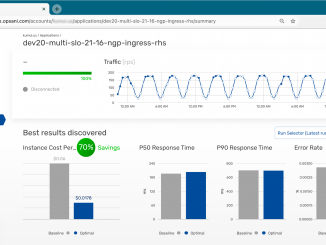
Reducing Kubernetes Costs by 70% in the Cloud with NGINX, Opsani, and Prometheus

2021-09-22 KENNETH 0

Reducing Kubernetes Costs by 70% in the Cloud with NGINX, Opsani, and Prometheus table.nginx-blog, table.nginx-blog th, table.nginx-blog td { border: 2px solid black; border-collapse: collapse; } table.nginx-blog { width: 100%; } table.nginx-blog th { background-color: #d3d3d3; align: left; padding-left: 5px; padding-right: 5px; padding-bottom: 2px; padding-top: 2px; line-height: 120%; } table.nginx-blog td { padding-left: 5px; padding-right: 5px; padding-bottom: 2px; padding-top: 5px; line-height: 120%; } table.nginx-blog td.center { text-align: center; padding-bottom: 2px; padding-top: 5px; line-height: 120%; } “It’s a perfect storm” may be a common phrase, but it is a useful one in the case of runaway cloud computing costs. Several factors build on one another to spawn this perfect storm: The people deploying workloads are not the people paying for them It’s easy to consume infrastructure on demand and programmatically Easily accessible code repositories make it possible to “borrow” functionality from [ more… ]