
No Image

Enhancing Inking on the Web

2021-08-19 KENNETH 0

Enhancing Inking on the Web Today we are excited to announce the preview availability of an enhanced inking experience in the latest Dev Channel builds of Microsoft Edge. We first introduced these enhancements during Build 2021, showcasing how this new web API, which has been implemented upstream in the Chromium open-source project, greatly reduces the latency between the tip of a physical stylus and ink as it’s drawn on the screen. From our initial experiments on Windows 11 Insider Preview Builds, we’ve measured up to a 240% improvement in latency, which we’ve highlighted in green in the animation below: We invite you to try this new and improved inking experience on the web by downloading the latest Windows 11 Insider Preview Builds and running the code sample presented later in this blog post on the latest Microsoft Edge Dev Channel. [ more… ]
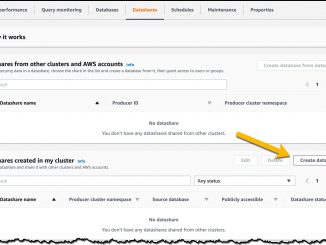
Amazon Redshift를 위한 계정간 데이터 공유 기능 출시

2021-08-18 KENNETH 0

Amazon Redshift를 위한 계정간 데이터 공유 기능 출시   오늘날 빠르게 변화하는 세상에서 성공을 거두려면 기업은 데이터를 신속하게 분석하고 의미 있는 작업을 시행해야 합니다. 많은 고객들이 데이터 중심 조직이 되기 위해 이러한 개념을 받아들이고 있습니다. 데이터 중심 조직은 데이터를 자산으로 취급하고 이를 사용하여 통찰력을 향상시키고 더 나은 의사 결정을 내립니다. 보안 시스템을 사용하여 데이터를 수집, 저장 및 처리하고 조직 내 사람들과 공유함으로써 데이터가 가진 힘을 최대한 활용할 수 있습니다. 일부는 데이터 및 분석을 고객, 파트너 및 외부 당사자에게 서비스로 제공하여 새로운 수익원을 창출합니다. 모든 이해 관계자는 정확한 동일 데이터를 단일 진실 공급원으로 공유하고 사용하기를 원합니다. 또한 성능 저하 없이 데이터의 실시간 뷰를 동시에 쿼리하고 필요할 때 정확한 정보에 액세스할 수 있기를 원합니다. 클라우드용으로 구축된 최초의 데이터 웨어하우스인 Amazon Redshift는 많은 고객 데이터 아키텍처의 데이터 웨어하우스 구성 요소로 널리 사용되고 있습니다. Amazon Redshift 사용자는 AWS 계정 사용자와 데이터를 공유할 수 있지만, [ more… ]

No Image

USN-5046-1: Linux kernel vulnerabilities

2021-08-18 KENNETH 0

USN-5046-1: Linux kernel vulnerabilities It was discovered that the bluetooth subsystem in the Linux kernel did not properly perform access control. An authenticated attacker could possibly use this to expose sensitive information. (CVE-2020-26558, CVE-2021-0129) Michael Brown discovered that the Xen netback driver in the Linux kernel did not properly handle malformed packets from a network PV frontend, leading to a use-after-free vulnerability. An attacker in a guest VM could use this to cause a denial of service or possibly execute arbitrary code. (CVE-2021-28691) It was discovered that the bluetooth subsystem in the Linux kernel did not properly handle HCI device initialization failure, leading to a double-free vulnerability. An attacker could use this to cause a denial of service or possibly execute arbitrary code. (CVE-2021-3564) It was discovered that the bluetooth subsystem in the Linux kernel did not properly handle HCI [ more… ]

No Image

USN-5044-1: Linux kernel vulnerabilities

2021-08-18 KENNETH 0

USN-5044-1: Linux kernel vulnerabilities It was discovered that the bluetooth subsystem in the Linux kernel did not properly handle HCI device initialization failure, leading to a double-free vulnerability. An attacker could use this to cause a denial of service or possibly execute arbitrary code. (CVE-2021-3564) It was discovered that the bluetooth subsystem in the Linux kernel did not properly handle HCI device detach events, leading to a use-after-free vulnerability. An attacker could use this to cause a denial of service or possibly execute arbitrary code. (CVE-2021-3573) It was discovered that the NFC implementation in the Linux kernel did not properly handle failed connect events leading to a NULL pointer dereference. A local attacker could use this to cause a denial of service. (CVE-2021-3587) Source: USN-5044-1: Linux kernel vulnerabilities

No Image

USN-5045-1: Linux kernel vulnerabilities

2021-08-18 KENNETH 0

USN-5045-1: Linux kernel vulnerabilities Norbert Slusarek discovered that the CAN broadcast manger (bcm) protocol implementation in the Linux kernel did not properly initialize memory in some situations. A local attacker could use this to expose sensitive information (kernel memory). (CVE-2021-34693) It was discovered that the bluetooth subsystem in the Linux kernel did not properly handle HCI device initialization failure, leading to a double-free vulnerability. An attacker could use this to cause a denial of service or possibly execute arbitrary code. (CVE-2021-3564) It was discovered that the bluetooth subsystem in the Linux kernel did not properly handle HCI device detach events, leading to a use-after-free vulnerability. An attacker could use this to cause a denial of service or possibly execute arbitrary code. (CVE-2021-3573) It was discovered that the NFC implementation in the Linux kernel did not properly handle failed connect events [ more… ]