
Amazon EC2 고성능 GPU 인스턴스 타입 P4d, 서울 리전 출시

2021-05-12 KENNETH 0

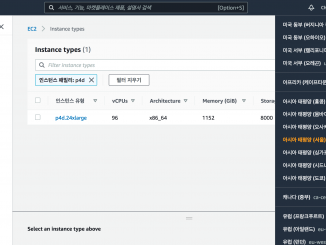
Amazon EC2 고성능 GPU 인스턴스 타입 P4d, 서울 리전 출시 지난해 11월 클라우드에서 기계 학습 모델 훈련 및 고성능 컴퓨팅 애플리케이션을 위해 NVIDIA A100 Tensor Core GPU로 구동되는  Amazon EC2 P4d 인스턴스를 출시하였습니다. 클라우드에서 400Gbps 인스턴스 네트워킹을 지원하는 최초의 인스턴스로서 이전 세대 P3 및 P3dn 인스턴스에 비해 딥 러닝 모델의 평균 2.5 배 더 나은 성능을 포함하여 ML 모델을 훈련하는 데 최대 60 % 낮은 비용을 제공합니다. 이제 EC2 P4d 인스턴스를 서울 리전에서도 사용할 수 있게 되었습니다. 이를 통해 고성능 기계 학습 모델 학습을 원하는 분들에게 도움이 될 것으로 생각합니다. 이 글에서는 Amazon EC2 P4d Instance Deep Dive 글을 기반으로 현재 기계 학습 워크로드 및 아키텍처에 통합하는 방법에 대해 자세히 설명합니다. Amazon EC2 P4d 인스턴스에는 총 96 개의 vCPU와 1.1TB의 RAM 및 8TB의 NVMe 로컬 스토리지가 포함 된 듀얼 소켓 Intel Cascade Lake 8275CL 프로세서가 함께 제공됩니다. P4d에는 NVSwitch 및 [ more… ]

No Image

USN-4951-1: Flatpak vulnerability

2021-05-12 KENNETH 0

USN-4951-1: Flatpak vulnerability Anton Lydike discovered that Flatpak did not properly handle special tokens in desktop files. An attacker could use this to specially craft a Flatpak application that could escape sandbox confinement. Source: USN-4951-1: Flatpak vulnerability

No Image

USN-4950-1: Linux kernel vulnerabilities

2021-05-12 KENNETH 0

USN-4950-1: Linux kernel vulnerabilities Ryota Shiga discovered that the eBPF implementation in the Linux kernel did not properly verify that a BPF program only reserved as much memory for a ring buffer as was allocated. A local attacker could use this to cause a denial of service (system crash) or execute arbitrary code. (CVE-2021-3489) Manfred Paul discovered that the eBPF implementation in the Linux kernel did not properly track bounds on bitwise operations. A local attacker could use this to cause a denial of service (system crash) or execute arbitrary code. (CVE-2021-3490) Billy Jheng Bing-Jhong discovered that the io_uring implementation of the Linux kernel did not properly enforce the MAX_RW_COUNT limit in some situations. A local attacker could use this to cause a denial of service (system crash) or execute arbitrary code. (CVE-2021-3491) Norbert Slusarek discovered that the CAN ISOTP [ more… ]

No Image

USN-4949-1: Linux kernel vulnerabilities

2021-05-12 KENNETH 0

USN-4949-1: Linux kernel vulnerabilities Ryota Shiga discovered that the eBPF implementation in the Linux kernel did not properly verify that a BPF program only reserved as much memory for a ring buffer as was allocated. A local attacker could use this to cause a denial of service (system crash) or execute arbitrary code. (CVE-2021-3489) Manfred Paul discovered that the eBPF implementation in the Linux kernel did not properly track bounds on bitwise operations. A local attacker could use this to cause a denial of service (system crash) or execute arbitrary code. (CVE-2021-3490) Billy Jheng Bing-Jhong discovered that the io_uring implementation of the Linux kernel did not properly enforce the MAX_RW_COUNT limit in some situations. A local attacker could use this to cause a denial of service (system crash) or execute arbitrary code. (CVE-2021-3491) It was discovered that the Nouveau GPU [ more… ]

No Image

USN-4948-1: Linux kernel (OEM) vulnerabilities

2021-05-12 KENNETH 0

USN-4948-1: Linux kernel (OEM) vulnerabilities Ryota Shiga discovered that the eBPF implementation in the Linux kernel did not properly verify that a BPF program only reserved as much memory for a ring buffer as was allocated. A local attacker could use this to cause a denial of service (system crash) or execute arbitrary code. (CVE-2021-3489) Manfred Paul discovered that the eBPF implementation in the Linux kernel did not properly track bounds on bitwise operations. A local attacker could use this to cause a denial of service (system crash) or execute arbitrary code. (CVE-2021-3490) Billy Jheng Bing-Jhong discovered that the io_uring implementation of the Linux kernel did not properly enforce the MAX_RW_COUNT limit in some situations. A local attacker could use this to cause a denial of service (system crash) or execute arbitrary code. (CVE-2021-3491) Kiyin (尹亮) discovered that the NFC [ more… ]