No Image

Extending Microsoft Edge Bounty Program

2017-05-17 KENNETH 0

Extending Microsoft Edge Bounty Program Over the past 10 months, we’ve paid out more than $200,000 USD in bounties to researchers reporting vulnerabilities through the Microsoft Edge Bounty Program. Partnering with the research community has helped improve Microsoft Edge security, and to continue this collaboration, today we’re extending the end date of the Edge on Windows Insider Preview (WIP) bounty program to June 30, 2017. Details on what the program includes are noted in this TechNet post, and information on Microsoft Bounty Programs can be found at https://aka.ms/BugBounty.  – MSRC and the Microsoft Edge teams Source: Extending Microsoft Edge Bounty Program

No Image

WordPress 4.7.5 Security and Maintenance Release

2017-05-17 KENNETH 0

WordPress 4.7.5 Security and Maintenance Release WordPress 4.7.5 is now available. This is a security release for all previous versions and we strongly encourage you to update your sites immediately. WordPress versions 4.7.4 and earlier are affected by six security issues: Insufficient redirect validation in the HTTP class. Reported by Ronni Skansing. Improper handling of post meta data values in the XML-RPC API. Reported by Sam Thomas. Lack of capability checks for post meta data in the XML-RPC API. Reported by Ben Bidner of the WordPress Security Team. A Cross Site Request Forgery (CRSF)  vulnerability was discovered in the filesystem credentials dialog. Reported by Yorick Koster. A cross-site scripting (XSS) vulnerability was discovered when attempting to upload very large files. Reported by Ronni Skansing. A cross-site scripting (XSS) vulnerability was discovered related to the Customizer. Reported by Weston Ruter of the WordPress Security Team. Thank [ more… ]

Announcing Windows Template Studio

2017-05-17 KENNETH 0

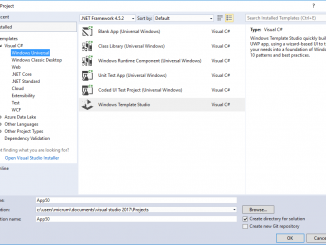
Announcing Windows Template Studio Today, we are pleased to announce the next evolution in your File → New Universal Windows Platform app in Visual Studio – Windows Template Studio. Windows Template Studio addresses a top community ask in our developer survey to make it easier and provide guidance to create new projects that target the Universal Windows Platform. In this post, we’d like to spend a few minutes introducing Windows Template Studio and show you how it works. Windows Template Studio uses a dev-friendly wizard to get your UWP apps to F5 in no time, bringing together the pages, frameworks and features that you want. Our wizard walks developers through four steps to quickly scaffold a new UWP app: Project Type: Select between standard layouts and predefined controls. Framework selection: Select the structure of your UWP app with in-house and third-party [ more… ]

Announcing Project Rome iOS SDK

2017-05-17 KENNETH 0

Announcing Project Rome iOS SDK Project Rome is a platform for enabling seamless cross-device and cross-platform experiences. The philosophy behind Project Rome is simple. App experiences shouldn’t be tied to a single device any more than data should be tied to a single device. Your apps, like your data, should travel with you. Previously, this meant switching between devices, while maintaining a single user experience, on a different Windows device. A few months ago, Project Rome features were extended to the Android platform, allowing you to start an app session on your Android phone and continue it on a Windows PC, an Xbox One or even a Surface Hub. Now, Project Rome support is also being extended to the iOS platform. You can download the Project Rome SDK for iOS here. Revisiting the Contoso music app If you have been following [ more… ]

Project Rome: Driving user engagement across devices, apps and platforms

2017-05-17 KENNETH 0

Project Rome: Driving user engagement across devices, apps and platforms Overview Recently there has been a dramatic shift in the way users use their devices. Rather than substituting new devices, users are using additional form factors like phones and tablets, alongside their PCs; many consumers live in a heterogeneous environment (interact with multiple platforms). In the past, form factor drove distinct types of behavior differences among consumers. However, this is no longer the case as multi-device consumers conduct all their activities across all their devices. Consumers also want to be able to use whatever screen is available independent of where the input comes from. As users purchase more apps and devices, they naturally expect their lives to become better – simpler, more enjoyable, more productive. However, suddenly, these users are faced with some harsh realities where each device has a [ more… ]