No Image

Improvements to XA Support in MySQL 5.7

2016-06-22 KENNETH 0

Improvements to XA Support in MySQL 5.7 Introduction XA stands for “eXtended Architecture”, and is a standard created by The Open Group for distributed transaction processing. While MySQL 5.0 was the first version to support XA, MySQL 5.7 has removed major limitations,  fixed a number of bugs, and increased overall test-case coverage.… Source: Improvements to XA Support in MySQL 5.7

Announcing the Public Beta Release of NGINX Amplify

2016-06-22 KENNETH 0

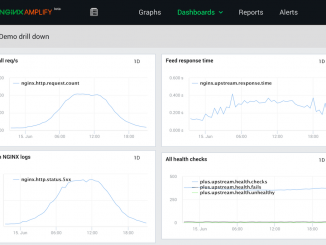
Announcing the Public Beta Release of NGINX Amplify We are proud to announce the free public beta release of NGINX Amplify, our new tool for monitoring NGINX and NGINX Plus. With NGINX Amplify you get visibility and control of NGINX and the applications it delivers. You can use it to quickly troubleshoot and resolve health and performance issues within your applications and across your infrastructure. NGINX Amplify includes powerful features such as recommendations for performance and security improvements, a customizable server monitoring dashboard, and a configurable alerting system. Register for a live webinar to be held on July 13, 2016 at 10:00 AM PDT to learn more and see a demo. Click here to sign up for free today. Easily access key performance metrics in NGINX Amplify with a customizable dashboard NGINX Amplify is easy to use, and takes only 5 minutes to set up. With NGINX Amplify you [ more… ]

No Image

Using NGINX Plus for Backend Upgrades with Zero Downtime, Part 3 – Application Version

2016-06-22 KENNETH 0

Using NGINX Plus for Backend Upgrades with Zero Downtime, Part 3 – Application Version This is the third of three articles in our series about using NGINX Plus to upgrade backend servers with zero downtime. In the first article, we describe the two NGINX Plus features you can use for backend upgrades with zero downtime – the on-the-fly reconfiguration API and application‑aware health checks – and discuss the advantages of each method. In this third article, we cover several use cases of upgrading the version of an application on a group of upstream servers. For use cases around upgrading the software or hardware on individual server machines, see the second article, Using NGINX Plus for Backend Upgrades with Zero Downtime, Part 2 – Individual Servers. When we switch to a new version of an application by adding a new set of servers to run it, we need a controlled way of taking the [ more… ]

Using NGINX Plus for Backend Upgrades with Zero Downtime, Part 2 – Individual Servers

2016-06-22 KENNETH 0

Using NGINX Plus for Backend Upgrades with Zero Downtime, Part 2 – Individual Servers This is the second of three articles in our series about using NGINX Plus to upgrade backend servers with zero downtime. In the first article, we describe the two NGINX Plus features you can use for backend upgrades with zero downtime – the on-the-fly reconfiguration API and application health checks – and discuss the advantages of each method. In this second article, we explore use cases around upgrading the software or hardware on an individual server, which is one of the most common reasons to take servers offline. We could just take the server offline with no preparation, but that kills all the current client connections, making for a bad user experience. What we want is to stop sending any new requests or connections to the server, while letting it finish off any outstanding work. Then [ more… ]

No Image

Using NGINX Plus for Backend Upgrades with Zero Downtime, Part 1 – Overview

2016-06-22 KENNETH 0

Using NGINX Plus for Backend Upgrades with Zero Downtime, Part 1 – Overview Upgrading backend servers in a production environment can be a challenge for your operations or DevOps team, whether they are dealing with an individual server or upgrading an application by moving to a new set of servers. Putting upstream servers behind NGINX Plus can make the upgrade process much more manageable while also eliminating or greatly lessening downtime. In a three-part series of articles, we’ll focus on NGINX Plus – with a number of features above and beyond those in the open source NGINX software, it’s a more comprehensive and controllable solution for upgrades with zero downtime. This first article describes the two NGINX Plus features you can use for backend upgrades – the on-the-fly reconfiguration API and health checks – in detail and compares them to upgrading with the open source NGINX software. The related articles explain how [ more… ]